
Hindsight: Remembering Prime Axie Infinity
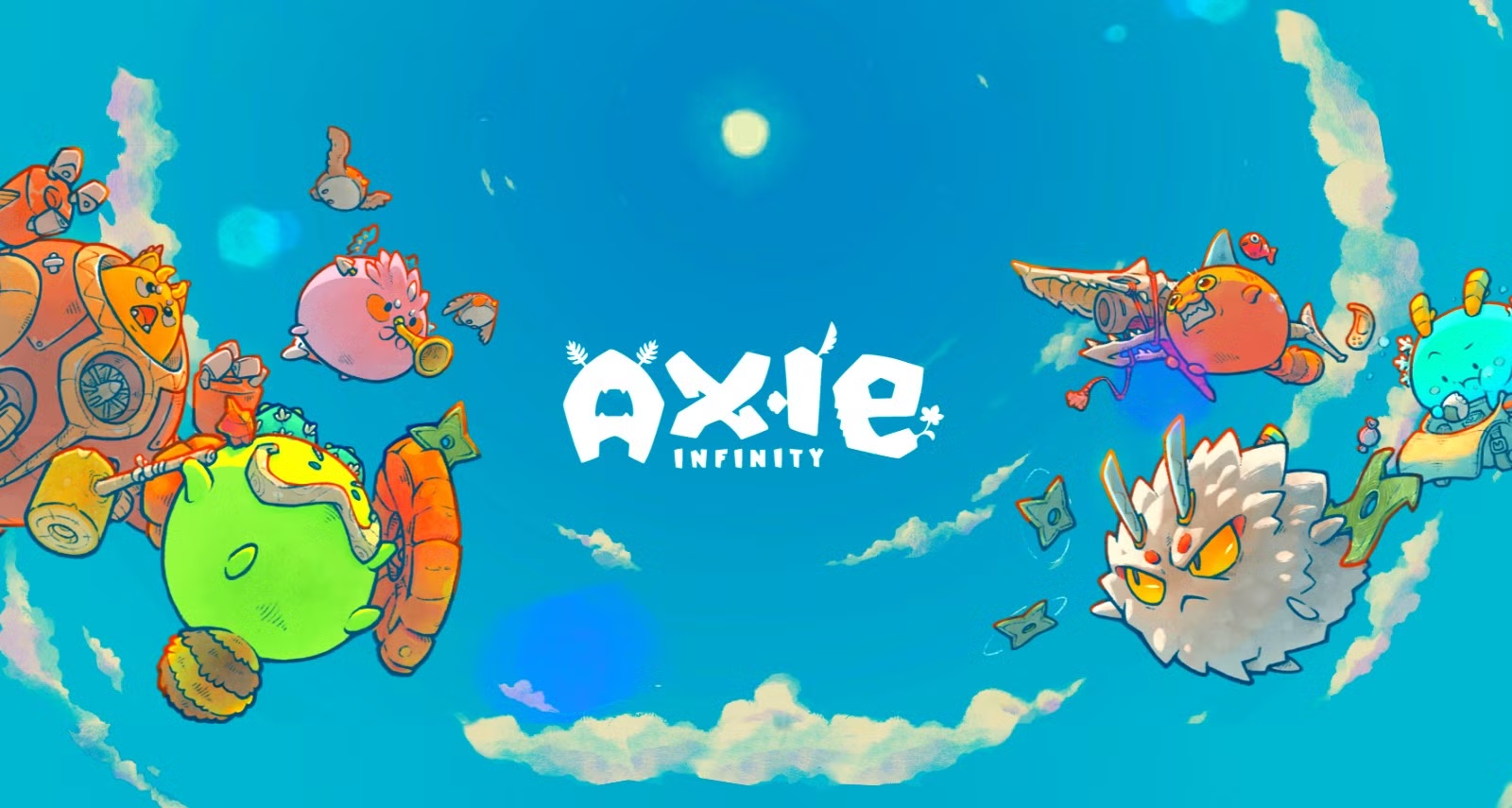
Looking back, Axie Infinity was actully fun.
The problem is that most of us remember it through the lens of losing money, so we conclude that the game itself wasn’t good. I don’t think that’s true.
I still remember listening to early adopters excitedly talk about the combinations they were trying to breed, the traits they hoped would be passed down, and the strategies they were discovering along the way.
Breeding Axies and trying to piece together the best combinations was fun. Discovering the meta and finding ways to counter it was fun. Building a team that no one expected to work—and watching it win—was fun.
If the game hadn’t been genuinely enjoyable, nobody would have played it during its early days. It wouldn’t have slowly built a passionate community before it exploded into the mainstream.
Somewhere along the way, though, things changed.
Axie Infinity became the poster child for what Web3 gaming was supposed to be. But by then, I think it had already lost its way.
It was no longer primarily about creating an enjoyable game.
It became about the Axie economy.
The conversation shifted away from discovering interesting strategies or experimenting with new team compositions. Instead, every discussion revolved around token prices, scholarship programs, and maximizing returns.
The game itself slowly became secondary.
Eventually, Axie Infinity wasn’t being talked about as a game anymore. It was being celebrated as a way for people—particularly in developing countries—to earn a living.
By that point, it was already past the point of no return.
Axie Infinity didn’t fail because it was a bad game. It failed because, somewhere along the way, people stopped judging it as a game.
Once the primary reason people play a game becomes income instead of enjoyment, the foundation becomes fragile. Every balance patch affects someone’s livelihood. Every market downturn becomes a crisis. The expectations placed on the developers become almost impossible to satisfy.
In many ways, they became the villains of their own hero story—not necessarily because they had bad intentions, but because the project had grown into something it was never designed to be.
That doesn’t mean I think Web3 gaming has no future.
Quite the opposite.
I don’t believe the narrative that NFTs are just expensive JPEGs that anyone can copy and paste.
That criticism misses the point.
And if I’m being honest, the Web3 community shares some of the blame for that misunderstanding. We spent years talking about prices instead of possibilities.
To understand why the technology still matters, we have to go back to the beginning.
Why did early adopters claim CryptoPunks?
Was it because they believed those images would eventually be worth hundreds of thousands of dollars?
For some, maybe.
But for many others, it represented something much more interesting.
For the first time, you could truly own a digital asset. Not rent it. Not license it. Own it.
That idea was revolutionary, and I still believe we’re only beginning to understand what it could eventually become.
Today, the gaming industry feels like it’s entering another period of change.
Large studios are closing, while small independent teams continue producing some of the most creative games in the industry. Players are beginning to question what it really means to own the games and items they purchase.
If there has ever been a moment for thoughtful Web3 leaders to step forward—not to build financial products disguised as games, but to build genuinely great games that happen to use blockchain technology—this might be it.
I believe that the future of Web3 gaming won’t be built by the next token. It’ll be built by the next game people can’t stop playing.